So you’re thinking of coming out to a Northern Colorado Rocketry club launch for the first time. If you’re like most of us, you probably have a thousand questions burning in your head. On this page, we will try to give you enough answers to keep you from feeling awkward after you’ve driven for an hour or more to do something with a group of people you’ve never met before.
NCR club launches are open to visitors and spectators as well as the first time flyer who just wants to see what this hobby is all about. Indeed, many people come merely to watch the big birds fly. Others have a very distinct plan that usually involves “moving up the alphabet”, starting with small Estes rocket kits powered by A, B, & C motors and moving eventually to home built rockets powered by M, N & O motors. We hope that someday they’ll be coming to watch your rocket punch a hole in the sky.
Northern Colorado Rocketry was formed in May of 2002, merging the talents and resources of two much older rocketry clubs, PHITS and TRM. PHITS, Punching Holes In The Sky, was affiliated with the National Association of Rocketry as Section 565. TRM, Tripoli Rocky Mountains, was affiliated with the Tripoli Rocketry Association as Prefecture 72. NCR’s members, now numbering about 100, continued the proud traditions of both of these clubs, maintaining affiliations with both national rocketry organizations and providing its members with the best possible rocketry experience in Northern Colorado.
The club is insured through both NAR and TRA, we hold a permit with the US Forest Service for use of the two launch sites, and we have the permission of the Federal Aviation Administration for use of the airspace above these sites. Our pool of launch equipment is extensive, capable of handling virtually any commercially available rod or rail combination on motors from 1/4A through O impulse. The club also owns and maintains a variety of other equipment including fire extinguishers, motor hardware, and hybrid ground support.
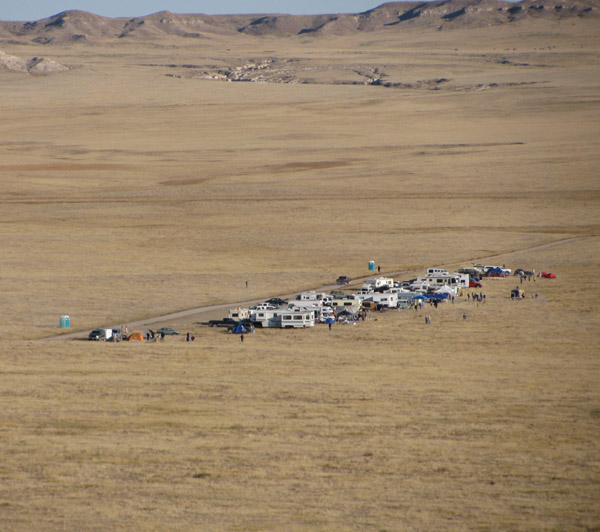
NCR club launches are held at two locations in the Pawnee National Grasslands about 40 miles east of Ft. Collins, CO. Good roads serve both sites, making them accessible by passenger cars. The road to the Atlas site is paved right up to the parking area and the road to the North site has been recently resurfaced. Links to driving maps for both of the launch sites can be found at on our website, http://ncrocketry.club/home.
At both launch sites, we have many thousands of acres of open prairie from which a rocket may be recovered. Both locations, however, are rustic. There are no amenities or shade, except for what you bring, and the nearest public toilets are a half hour drive.
Coming prepared will make your experience with us more rewarding. The prairie is home to antelope, jackrabbits, coyotes and a variety of other fauna and flora. It also has numerous cacti. Long pants and heavy soled boots are highly advised when hiking around the prairie. And eight hours of exposure to the sun at a mile above sea level is enough to make most of us uncomfortable without sunscreen and water.
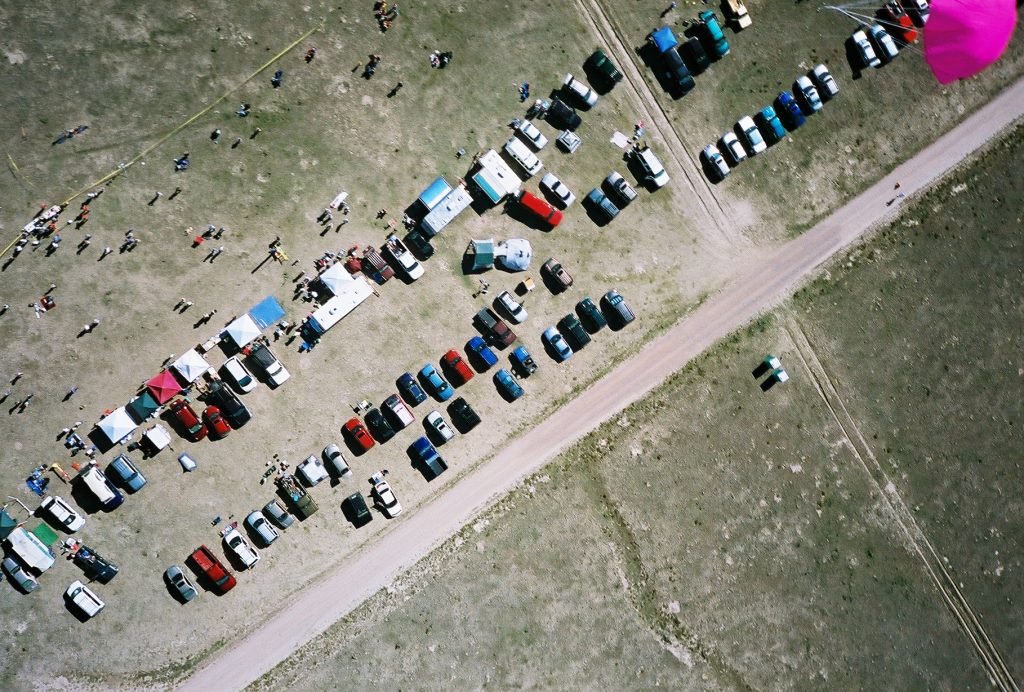
When you arrive, please park your car in the parking areas. At the Atlas launch site, park anywhere on either side of the access road. To conserve on space close to the launch site, please park perpendicular to the road. At the North launch site, unless you show up very early, the parking area is not as easily defined but should be fairly obvious. Like at the Atlas launch site, please park perpendicular and within about 50 feet of the road.
Always keep in mind that, while procedural guidelines are in place to minimize risk to people on the ground, rocketry, by its very nature, involves some danger, albeit small. After almost 60 years, model rocketry suffered its first fatality last fall when a mid-sized rocket dropped to earth and struck its owner.
Once parked, we ask that you respect these general rules for the launch. Most of these are for your safety.
1. Stay on the parking side of the rope fences separating the launch area from the parking and preparation areas. When the rope fences are not up, stay behind a line parallel to the road and even with the launch desk. Do not enter the launch area unless you have business there and not until the Launch Control Officer announces “pad is open”.
2. During a launch, if the Launch Control Officer announces a “heads up” flight, stop whatever you are doing and watch the launch. Such a launch usually involves a rocket that, while considered airworthy, may pose a larger than normal risk to people on the ground.
3. During a flight, if the Launch Control Officer asks for “quiet”, please hold any noise to a minimum. Such a request is often made to make it easier to hear the ejection charge on a rocket that has escaped visual tracking, possibly the last evidence one might have which direction a rocket has traveled.
4. Children under the age of 12 must be accompanied by an adult while in the launch area. Older children, ages 12 to 18, must be under the care of a parent or responsible adult who is at the launch.
5. Unless there is an emergency, please do not run in the parking, preparation, or launch areas.
6. In the case of a grass fire, we ask all able bodied adults to help as directed by the Launch Control Officer and Range Safety Officer. The exception to this request is that people wearing synthetic clothes should not go anywhere near the fire.
7. Finally, remove any trash you might have created while visiting us. If you brought it, please take it with you.
The Launch Control Officer is the person who runs the launch control for the many pads in the launch area. S/he is responsible for maintaining smooth, safe launch operations. The LCO will announce on the PA system each launch, detailing the type of rocket, its owner, the size of motor, and other pertinent information, followed by a short countdown and the launch. Some of the LCO’s announcements are informational while others are for your safety. Please pay attention to the LCO.
If you only intend to be a spectator, armed with this information, you are ready for a NCR club launch and you need not read further.
If, instead, you’d like to launch, then you need to acquire a membership package. The membership package includes an application for membership and much of the procedural information available on the club website. The Launch Control Officer should be able to direct you to the person who can help you with this. To give you the opportunity to “try us out”, your first launch is free. After that, you must join the club to continue launching with NCR. Also, to launch high power motors, H impulse and larger, you must be a current member of either NAR or TRA and be certified for the class of motor you wish to use.
Most people use their cars as a base of operations for their day’s activities. We often set up tables, chairs, and other equipment around our cars to minimize the amount of unloading before and loading after the launch.
To launch, prepare your rocket for flight at your car. Install motors, pack parachutes, and do whatever else is required to fly your rocket. Do not install motor igniters or arm any electronics until on the pad.
Although the NAR, TRA, and NCR go to great lengths to minimize the risk to people and property, sadly, not all rocket systems function as planned. Even NASA and the ESA, with budgets in the $billions, regularly have problems, some with catastrophic results. If your rocket has something other than a vertical flight, or becomes a “lawn dart”, don’t be embarrassed, it has happened to all of us. Rather, treat it as an opportunity to learn. If you lose your rocket, try to figure out why and what you might do next time to correct the situation. If your rocket has a catastrophic collision with a nearby planet, the remains may hold the key to why the system failed to work properly. Also, to keep the prairie pristine, always make your best effort to recover your rocket or clean up its remains.
Finally, although most of us are passionate about rocketry, sharing the experience with others is even more rewarding. Don’t be reluctant to ask questions. Some of the best resources for the hobby are walking around at the launch site and most will be more than happy to share their knowledge with you.
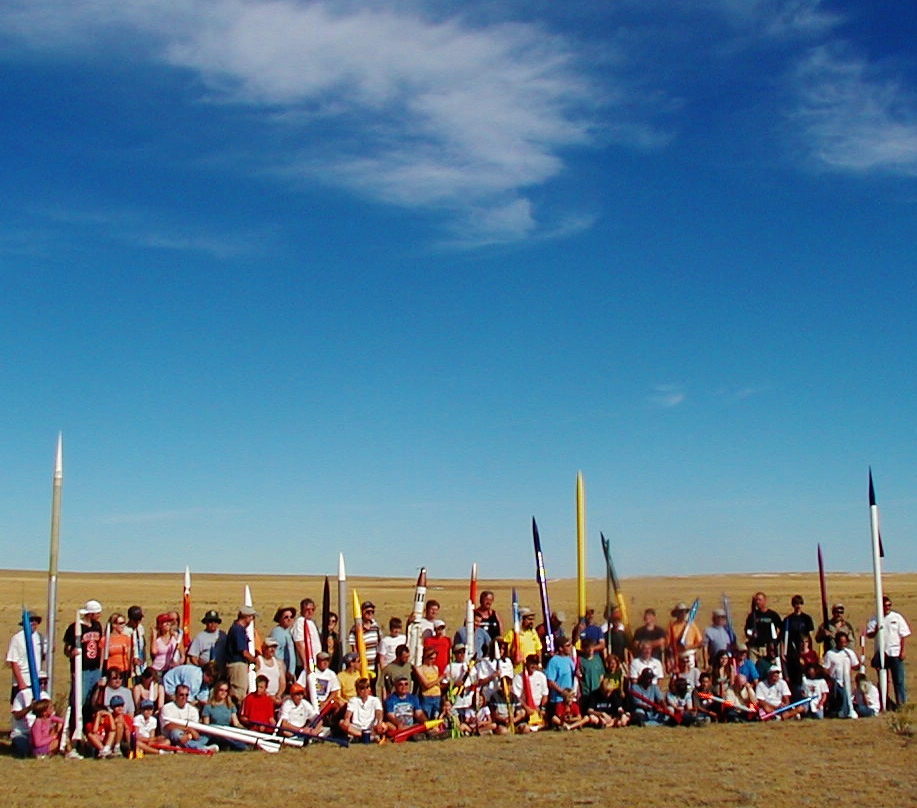
We look forward to seeing you at the next Northern Colorado Rocketry club launch.